Or: Another book list

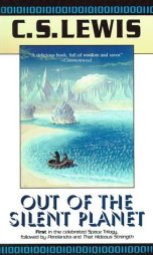
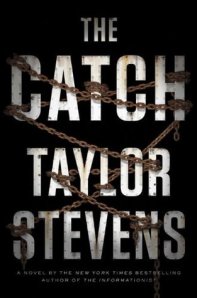
The Telegraph published a list today of the 50 best cult books.

The comments section is nearly as interesting as the article itself. Readers are arguing that certain omitted titles belong on the list, finding fault with the brief one-paragraph reviews, and pointing out flaws in the chosen works. It’s humorous.

I’m not sure why I find cult classics interesting, but I do. Maybe a year ago, I went through the list of cult classics on Netflix, adding nearly all the ones I hadn’t seen to the queue. Now, clearly, many of these aren’t good films in their own right. I suppose I like to know what has so deeply influenced my culture, know where so many of those pop culture references and quotes that have made their way into common speech come from. I certainly won’t be moving this list of books to the top of my reading list, but I can’t deny a certain draw.

It’s also amusing that although the group came together and created such a list, they (tried and) failed to define “cult book.”

I found the article, naturally, via Shelf Awareness.

EDIT: Ack! My link went somewhere totally different. Fixed.

Actually, today’s World Book and Copyright Day, but it’s worth commemorating nonetheless.

It seems UNESCO organized the commemoration, which was first celebrated in 1995. UNESCO chose April 23 based on a feast day in Spain, which was related to books, and the apparently coinciding anniversary of William Shakespeare’s birth and death.

I find it strange that World Book Day is celebrated nearly two months earlier in the UK, on March 6. It’s apparently because that part of the world already had a somewhat established celebration of books, before World Book Day was created. This makes sense.

OK! World Book and Copyright Day! Now what? Although the day has been recognized for well over a decade, it seems that not much happens. It doesn’t have much renown. This is sad.

Per the UNESCO website, there’s a convention of independent publishers meeting today and UNESCO itself is “launching” six children’s books at a museum in Indonesia. That’s it. Maybe there are more low-key events happening in elementary schools and the like across this country. I hope so.

Last month I wrote about the UK’s Quick Reads program; that was part of what they call World Book Day. Too bad no such initiative exists here.

Copyright is a big deal. I’ve drafted so many posts about it here, but I don’t want to rush writing anything about it. It’s more important than that.

So, how should we commemorate World Book and Copyright Day? Any ideas? It may be too late for this year, but we should start planning for next year.


I finished reading the third volume of novel Kristin Lavransdatter, The Cross, by Sigrid Undset last night.

I have really enjoyed this entire trilogy. The story is grand and transcends time. The end is necessarily sad, though, as the story follows the life of a woman, from youth to old age. It reminded me of the kind of sadness I experienced watching Return of the King. The same feeling was not conveyed, however, by J.R.R. Tolkien’s book by the same name (at least not nearly as deeply).

I’ve been drafting and redrafting this ‘graph in my head since sometime in the middle of the second volume; maybe I’ll get it down on “paper” now. One of my favorite aspects of this trilogy is how it is set so long ago and yet so many of the characters’ lessons are applicable to life today. The portrait the story paints of life in the Middle Ages both confirms and challenges my perception.

I don’t know what else to say about these books without giving anything away. They have to be some of my all-time favorites, though.

I can cross another line off the list! … What should I read now? Something light(er) or another title on the list? ‘Course, if I dive into Cloudstreet by Tim Winton, I’d also be making progress on that tl;dr challenge. Decisions, decisions.

Here is my post on the first volume, The Bridal Wreath, and here’s my post about the second volume, The Mistress of Husaby.

I have no idea why this challenge is called this; it seems to me that a more apt name would coordinate with the challenge’s button:

I think a good name would be tl;dr — which means, in case you were wondering, too long; didn’t read.

I found the challenge at The Hidden Side of a Leaf; it was created by Renay.

Here’s how it works:

Right now, until May 1, each participant can create a list of 10 book recommendations. Oh, you’re ’sposed to love the books you recommend. Then, each participant can choose (from all the compiled lists) a minimum of 3 books to read, between May 1 and November 30. (It’s OK to start early, according to Renay.)

It’s certainly acceptable to recommend a book that’s already been recommended — that just makes those titles more likely to be read by others.

The list to choose from is well over 300 titles right now, so it shouldn’t be hard for anyone to find titles they’d like to read.

Here’s the information page, the participants page, a reading lists page, and a master book list page.

So, now I have to create a list of books I love. While it’s not hard to think of books I love, it is difficult to create a list, to narrow it down, to feel like I’ve set such a list in stone. Therefore, I shall hedge: This is just the list I’m making now, it may not be the list I’d have made yesterday, or the list I’d make next week.

OK, now that list, in no particular order:
1. Traveling Mercies by Anne Lamott
2. Master and Commander by Patrick O’Brian
3. One Day in the Life of Ivan Denisovich by Aleksandr Solzhenitsyn
4. Kristin Lavransdatter I: The Bridal Wreath by Sigrid Undset
5. War and Peace by Leo Tolstoy
6. The Story of the Stone, Vol. 1 by Cao Xueqin
7. Whose Body? (Lord Peter Wimsey Mystery) by Dorothy L. Sayers
8. Safely Home by Randy Alcorn
9. Ella Minnow Pea by Mark Dunn
10. Uncle Tom’s Cabin by Harriet Beecher Stowe

Whew! OK, the list has some heavy tomes, but it also has some lighter fare.

I haven’t figured out which three (or more) from the master list I’ll tackle yet, but I did notice Cloudstreet by Tim Winton there, and it’s already in my to-be-read list, so that’s probably one of them.

Come join me in the challenge! It’s only 3 books …

I’ve spent the last hour-plus trying to find out who is going to be on my ballot in the next month or so. Unsuccessfully, I might add. I did find some information, but I did not find complete information.

This situation is not surprising to me, but it is frustrating. The problem is partly due to the current (for nearly the last decade, now) newspaper arrangement in the two-county area.

According to candidate filings with Benton County, 4 names will be on the ballot in one Siloam Springs district for the position of justice of the peace. Nowhere online did I find which numbered district encompass what parts of the county. I did know that this district with 4 candidates was in at least part of this town, though, because I’ve seen candidates’ signs. (I also recognized the name of the incumbent from when I worked at the hometown newspaper.)

The local newspaper — Siloam Springs Herald-Leader — has mentioned two of the candidates’ names. The other two are nowhere to be found. [While I worked there, I made a concerted effort to include articles relevant to county politics.]

I had to check my voter registration card to learn that I won’t have to choose any of these candidates, since in my JP district, the incumbent is running unopposed.

Now my responsibility as voter must focus on the county-wide races: Collector, coroner, judge and sheriff.

The difficulty, though, is that it’s impossible to get information on these races. The county newspaper (Benton County Daily Record) faithfully interviews each candidate, but I can’t get the county newspaper. Well, I could go buy a copy on the newsstand each day, I suppose, but that’s expensive and annoying. I can’t get it delivered to my house, even if I wanted to. If I called and asked, I would instead be delivered the Northwest Arkansas Times, which is owned by the same company but is published in the county south of here and also covers mainly the one “city” in that county. It does not concern itself with lowly county races for the neighboring county.

I don’t think this problem is common throughout the country. I think it’s rather rare, in fact. But it’s still a problem. I have told the leadership of the company and of each of these newspapers about it before, when I worked for the local paper. Here’s the rub: The decision to exclusively offer the Times in Siloam Springs is based entirely on advertising, to the exclusion of content considerations.

The theory, several years ago when the situation was established, was that Siloam Springs residents drove south to Fayetteville — and not north to Rogers or Bentonville — for shopping and entertainment. This scenario, while quite probably true when the study was initially completed, is out of date and now inaccurate. Benton County’s major population centers have grown exponentially, and they have been the sites of most major retail growth in the past 5 years. More new restaurant options, the new mall, among other things, have undergirded the new situation, where Siloam Springs residents now sometimes go north and sometimes go south. The decision is no longer automatic.

At the very least, the company should offer Siloam Springs residents their choice of newspapers.

The new bookstore downtown, which I wrote about last week, is supposed to have its “soft opening” today, from what I’ve heard. The building still had no signage, though, when I drove by last night. The official grand opening (complete with ribbon cutting) is slated for Thursday, April 24.

I went down Friday after posting here and helped organize a few shelves. What a task! It was fun, though. While I was there, I heard a few tidbits:
• Tentative, initial hours: Monday through Saturday, 8 a.m. to 8 p.m. This is dependent upon traffic, however; if no one comes in until 9:30 a.m., consistently, why open at 8 a.m.?
• I think it’s Trish Houston’s venture, although she’s certainly not in it alone.
• Something about having a credit system, if a customer brings in books to sell, that customer will in turn receive some sort of credit toward books to buy. I’m not sure what the system is, though.

I guess I hurried my previous post, because I apparently omitted several things I meant to write.

I’m excited about this bookstore for a number of reasons:
• Books are good, and thus bookstores are good;
• The addition of a retail shop; should help downtown; and
• It’s not affiliated with any chain, and I’m all for independent businesses.

Here’s its website again.

The Guardian has a lovely, evocative piece on a new bookstore in Holland. The shop — Selexyz Dominicanen — complete with a cafe serving up cappuccino and red wine, resides in a Dominican church that was consecrated in 1294. The ceilings still bear the ancient paintings, and books are stacked well beyond the first floor.

In some ways it’s neat, and it’s certainly better than what could happen here (I pray that even in America we wouldn’t tear down such a monumental architectural work!); however, it some ways the thought of a cathedral being repurposed makes me feel a tiny bit uneasy. Still, it’s a beautiful space, and could be inducement for me to add Maastricht to my list of places in Europe to visit. And this has to be a more appropriate use for the space than its previous use, as a bike pound.

Views from the top shelf along the nave of the church are nothing short of uplifting, while just above your head are the faded remains of ceiling paintings from around 1337; in a very different style, there are others by the artist Jan Vessens, depicting saints and sinners and episodes from the Bible, dating from 1619. It is rare to get so close to such paintings anywhere, let alone in a bookshop.

Photo credit: Sueli Brodin, via Flickr.
Via Shelf Awareness from a week ago.

I ran across a fun post today, via Language Rules! The post on that rarely used blog linked to Receding Hairline’s recent post on common typographic errors (rather than grammatical errors) and how to fix them.

I agree with most of his post, with the exception of the part about dashes. Long dashes — as seen here, and otherwise known as em-dashes — are not being replaced with en-dashes (–). And I understand that common usage, for some reason, indicates that dashes should not have spaces around them, but I don’t understand that. The function they serve is separating, rather than connecting, so I intentionally use spaces around em-dashes here. I rarely use en-dashes, reserving them from when a range is needed (such as 1–2), or some similar function.

I also posted a comment objecting to his ellipsis entry. It’s not really that I disagree with what he’s said, but he has committed a usage error. Most of the time, ellipses should be preceded by a space as well as followed by a space, particularly when the three dots are not placed at the end of a complete sentence.

The burg of Siloam Springs, Arkansas, will have an independent bookstore downtown as of next week.

Books on Broadway, at 201 N. Broadway, is slated to hold its grand opening next Thursday, April 24. I’ve been intentionally driving past whenever I’m out and about and peering in the windows on walks.

It’s supposed to offer new and used books.

This is a nice thing for downtown Siloam Springs, which needs another (retail) reason for people to visit. And how can I not be excited about it?

The store’s website is fledgling, but it’s up.

I’ve heard more about the store, but I only have this additional information second- or third-hand, so I’ll refrain from adding it here.

or, Fun with words

Commenting alongside the J.K. Rowling suit vs. RDR Books for copyright infringement (the author is suing, claiming the publisher’s Harry Potter lexicon uses her copyrighted work), the Times of London published a nice editorial yesterday:

A generation has now grown up besotted (©Milton) with Quidditch and Hogwarts. However, it is not astonishing that J.K. Rowling is using a court case to remind the writers of a zany (©Shakespeare) Harry Potter lexicon, now making the jump from cyberspace (©William Gibson) to print, that it is not common property and she did invent it all. She may succeed in persuading the court that her copyright is violated by some parts of the proposed encyclopedia. Indeed, she may have a respectable commercial case, but not much of a cultural one. However, unless she employs a mole (©le Carré) to oversee our every conversation and written exchange, she should not try to suppress a collection of her invented words. For Voldemort, Muggles, Horcruxes and all Rowling’s other serendipitous (©Walpole) coinages are ours now; it would be pig-headed (©Jonson) not to let us use them as we wish.

English is so full of the neologisms of authors that if we had to credit each one, we would assassinate (©Shakespeare) our prose, and make readers chortle (©Carroll) mightily. Without being didactic (©Milton), Rowling can be assured that she is in good company in contributing words, gratis, to the language. The best she should hope for is that her words become as widely adopted as those of other authors. Perhaps the highest honour has been bestowed on the quark (©Joyce), used as the name for a sub-atomic particle. As there are quarks across the Universe, Joyce may be our most disseminated author. Rowling should be proud if Doxies, Thestrals or Butterbeer make it as far as a lexicon.

Via Shelf Awareness.